Views: 0 Author: Site Editor Publish Time: 2026-08-20 Origin: Site
Heavy machinery operations demand flawless safety interlock systems. You need a highly dependable operator presence sensor to protect personnel and prevent catastrophic accidents. Specifying the wrong sensor technology introduces severe operational risks to your equipment fleet. Nuisance tripping frustrates vehicle operators and destroys productivity on the job site. Operators might attempt to bypass the safety system entirely to avoid constant interruptions, creating massive liability. Worse, catastrophic safety failures occur when harsh environmental conditions destroy fragile internal components. The industry has shifted away from traditional mechanical plunger switches. Non-contact magnetic limit switches now dominate the market because they eliminate external mechanical wear completely. However, this shift introduces complex new specification challenges for engineers. We must move beyond generic component specifications. We need a rigorous, application-specific evaluation of the two dominant magnetic sensing technologies. This guide provides a comprehensive technical evaluation of Hall Effect and Reed switches for seat occupancy applications.
Solid-State vs. Electromechanical: Hall Effect sensors offer infinite cycle life with no moving parts, while Reed switches rely on internal mechanical contacts that are susceptible to wear but operate without drawing continuous power.
Environmental Resilience: High-vibration and high-shock environments heavily favor Hall Effect technology, whereas Reed sensors are vulnerable to contact bounce and mechanical fatigue under extreme dynamic loads.
Power Budget Constraints: A reed seat occupancy sensor is a passive device (zero power consumption), making it ideal for battery-sensitive applications, whereas Hall Effect sensors require a continuous, albeit low, operating current.
Precision and Tolerances: Hall Effect sensors provide tighter actuation tolerances and programmable ratiometric outputs for complex movements, while Reed switches require careful management of magnetic orientation and mechanical stack-up.
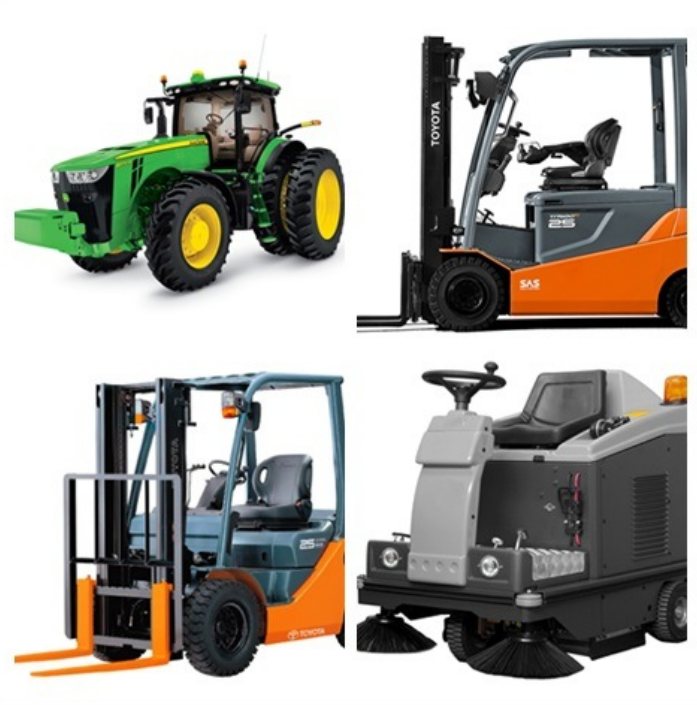
Safety interlock systems rely entirely on accurate physical occupancy detection. Regulatory bodies mandate these protective systems across multiple commercial vehicle classes, including earthmoving machinery, agricultural tractors, and material handling equipment. You cannot engage a power take-off (PTO) shaft on a tractor without an operator securely in the cab. Forklifts and telehandlers must lock out hydraulic mast movement the second the driver leaves the seat. These strict operational rules protect human lives and prevent severe equipment damage from runaway machines.
A highly reliable Seat Occupancy Sensor forms the critical core of this safety loop. We must define uncompromising baseline requirements for field success. The sensor must actuate consistently under highly variable operator weights. A lightweight driver navigating rough terrain must trigger the system just as reliably as a heavy driver on smooth pavement. Environmental ingress protection remains absolutely critical in these applications. Equipment operates in mud, driving rain, and heavy dust. You must specify the correct Ingress Protection (IP) rating based on the working environment.
IP Rating | Protection Level | Typical Field Application |
|---|---|---|
IP65 | Dust-tight, protected against low-pressure water jets. | Enclosed cabins, warehouse forklifts, light industrial sweepers. |
IP67 | Dust-tight, protected against temporary submersion in water. | Open-cab tractors, skid steers, outdoor construction equipment. |
IP69K | Dust-tight, protected against high-pressure, high-temperature washdowns. | Forestry equipment, mining vehicles, agricultural machinery requiring steam cleaning. |
Non-contact magnetic sensing represents the current industry standard for safety interlocks. Traditional mechanical switches fail rapidly due to dirt ingress, moisture corrosion, and physical friction. Mud packs into the plunger mechanism and freezes solid in winter, rendering the switch useless. Magnetic sensors eliminate these external failure points entirely. They share core technologies with automotive speed sensors and liquid level monitors. Magnetic sensing delivers the exact reliability profile required for safety-critical seat interlock systems.
A reed seat occupancy sensor operates as a precise electromechanical device. It features a hermetically sealed glass envelope at its core. This protective glass tube contains two thin ferromagnetic contact blades. We refer to these metal blades as reeds. They sit suspended in a vacuum or an inert gas like nitrogen or argon. This inert atmosphere prevents the metal contacts from oxidizing over time. The entire assembly functions as an externally non-contact device, meaning no external parts physically touch the sensor housing to trigger it.
Actuation occurs strictly through magnetic induction. An approaching magnetic field interacts directly with the suspended ferromagnetic blades. The magnetic flux lines induce opposite magnetic polarities on the overlapping ends of each reed. These opposite poles attract one another with increasing force as the magnet draws closer. The internal contacts eventually snap together, closing the electrical circuit. When the external magnet moves away, the natural spring tension of the metal blades forces them apart instantly.
This traditional design offers inherent electrical simplicity. It operates as a strict binary device. The switch remains either completely open or completely closed. The electrical architecture remains entirely passive. The sensor requires absolutely no operating voltage to monitor its environment. It only passes electrical current when the internal contacts physically touch. Manufacturers often plate the contact points with rhodium or ruthenium to handle minor electrical arcing and extend the mechanical lifespan.
A Hall Effect seat sensor utilizes advanced solid-state physics. It contains absolutely no moving parts inside the housing. The core component is a specialized semiconductor transducer. A continuous, low-level electrical current flows through this semiconductor material during normal operation. When a magnetic field approaches the sensor, it exerts a physical phenomenon known as the Lorentz force on the flowing electrons. This invisible force deflects the electrons toward one specific side of the semiconductor plate.
This electron deflection creates a measurable voltage difference across the transducer material. We call this generated differential the Hall voltage. The output voltage varies directly and proportionally in response to the approaching magnetic field strength. Because the raw voltage signal is incredibly small, usually measured in microvolts, the sensor requires internal amplification.
Engineers integrate complex Application Specific Integrated Circuits (ASICs) alongside the raw sensing element. These sophisticated ICs provide critical signal conditioning. They manage electronic hysteresis control to prevent rapid, erratic toggling near the exact actuation point. The internal circuitry translates the raw analog Hall voltage into a clean, stable digital output. To protect these sensitive electronics from the harsh external environment, manufacturers pot the entire printed circuit board (PCB) in industrial epoxy or polyurethane resin. This potting compound locks the components in place, making them impervious to moisture and physical shock.
Conducting a thorough seat switch comparison requires evaluating multiple intersecting engineering variables. You must match the underlying technology to the specific environmental demands of your application. A sensor that performs perfectly in an electric warehouse pallet jack will fail miserably in a diesel forestry harvester.
Reed switches possess a strictly finite mechanical lifespan. The internal ferromagnetic blades physically strike each other during every single actuation cycle. This repetitive mechanical action leads to eventual metal fatigue. The delicate contacts remain highly susceptible to micro-welding. High inrush currents from vehicle relays can melt the microscopic contact plating. The blades may fuse together permanently, causing a dangerous fail-closed scenario where the machine thinks the operator is always present. Contact pitting also occurs steadily over time. This pitting increases internal electrical resistance and eventually causes intermittent signal failure.
Solid-state Hall Effect sensors offer a virtually infinite operational cycle life. They experience zero internal mechanical wear regardless of usage frequency. The semiconductor detects the magnetic field electronically without any physical contact or striking action. You can cycle a Hall sensor millions of times without any degradation in signal quality.
Electrical load characteristics heavily impact Reed switch degradation rates. Inductive loads, such as mechanical relays and solenoids, create destructive voltage spikes during circuit de-energization. When the seat switch opens, the collapsing magnetic field in the relay coil sends a high-voltage spike back down the wire. These sudden spikes cause electrical arcing across the microscopic reed gap. Resistive loads degrade the contacts slower but still cause unavoidable long-term wear. Hall sensors isolate the sensitive measuring element from the vehicle load via internal output transistors. They handle switching entirely electronically, eliminating arcing and micro-welding risks completely.
Strict power budgets dictate sensor selection in many modern commercial vehicles. Reed switches provide a massive engineering advantage here. They draw absolute zero power when sitting in the open state. Equipment can sit idle in a storage yard for six months over the winter without draining the primary battery. This makes them the ideal choice for passive safety loops in highly battery-sensitive applications, such as small electric utility vehicles or manually started gas equipment.
Hall Effect sensors require a continuous operating current to function. The internal semiconductor and supporting integrated circuits need constant power to monitor the surrounding magnetic field. Modern low-power ICs mitigate this parasitic draw significantly. Some advanced sensors consume only 2 to 5 milliamps during sleep modes. However, they never eliminate the electrical draw entirely. If you have multiple solid-state sensors on a machine, that milliamp draw compounds. You must account for this continuous parasitic current in your overall vehicle electrical architecture to prevent dead batteries during long-term storage.
Heavy machinery operates in brutally unforgiving environments. Agricultural tractors, forestry harvesters, and construction excavators generate massive, continuous vibration profiles. A bulldozer ripping through frozen ground sends violent shockwaves directly through the steel chassis and into the seat frame. These harsh environments expose the inherent weaknesses of electromechanical components.
Reed switches suffer heavily from contact bounce under high-vibration conditions. Severe mechanical shock can force the closed ferromagnetic blades to separate momentarily. The contacts act like tiny tuning forks, vibrating apart for 2 to 3 milliseconds. The machine's master controller reads this brief open circuit as the operator leaving the seat. This creates dangerous false signaling. The safety interlock system triggers a sudden, unexpected machine shutdown while the operator is actively working. Continuous high-frequency vibration also accelerates mechanical fatigue in both the glass envelope and the metal blades, leading to premature component shattering.
Hall Effect sensors demonstrate total immunity to mechanical shock and vibration. The solid-state design physically cannot bounce. Heavy G-forces and resonant frequencies do not affect the flow of electrons through the semiconductor material. They provide rock-solid signal stability in the most violent operating conditions imaginable. If you are designing equipment for earthmoving or agriculture, solid-state technology is mandatory.
Magnetic alignment dictates sensor accuracy and reliability. Reed switches demand strict, precise magnetic orientation. The magnetic flux lines must intersect the internal blades at highly specific angles. Incorrect alignment creates dangerous dead zones. You might experience double-actuation, where the switch toggles on, off, and on again during a single seat compression. Engineers call this the lobe effect. It complicates mechanical seat design and slows down assembly line mounting procedures. You must carefully select the magnet material, usually opting for stable Neodymium over weaker Ferrite, to ensure the flux field reaches the glass tube reliably.
Complex seat suspension systems utilize various mechanical travel paths. Some seats pivot on a rear hinge, creating an arcing motion. Others utilize direct vertical linear movements on scissor suspensions. Hall Effect sensors adapt easily to these diverse actuation paths.
They offer immense design flexibility. You can program highly specific actuation points directly into the IC. Hall sensors measure linear movement ratiometrically. They provide a variable analog voltage based on the exact distance of the magnet. This capability allows you to track exact seat position and suspension compression rather than relying on a simple binary on/off state. You can program the sensor to ignore the first inch of suspension travel, ensuring the machine doesn't shut down when the operator bounces over a rut.
Engineering Parameter | Reed Switch Sensor | Hall Effect Sensor |
|---|---|---|
Internal Mechanism | Moving ferromagnetic blades | Solid-state semiconductor |
Cycle Life | Finite (Prone to metal fatigue) | Virtually Infinite |
Standby Power Draw | 0 mA (Passive) | 2 - 5 mA (Active) |
Vibration Tolerance | Low (Prone to contact bounce) | Excellent (Total immunity) |
Output Signal | Strictly Binary (On/Off) | Binary or Programmable Analog |
Magnetic Alignment | Highly sensitive (Lobe effects) | Flexible and programmable |
Both sensor technologies respond directly to magnetic fields. This shared characteristic creates a common vulnerability. External magnetic interference can easily cause false actuation. Nearby high-torque electric motors generate incredibly strong electromagnetic fields. A 100-amp alternator cable routed directly under the seat pan produces stray flux lines when under heavy load. Even aftermarket seat heater coils can generate enough interference to disrupt sensitive switches. These external forces can trick the sensor into detecting an operator when the seat is actually empty.
You must implement robust engineering mitigation strategies. Magnetic shielding protects the sensor housing from stray external fields. You can install thin steel plates between the high-current cables and the sensor bracket to deflect the interference. You can use specific magnet pole orientations to isolate the intended signal from background noise. Utilizing programmable Hall sensors provides the absolute best defense against interference. You can program exceptionally tight hysteresis bands. The sensor will only actuate when it detects a highly specific magnetic flux density, ignoring all weaker stray fields generated by the vehicle's electrical system.
Commercial seat assemblies degrade significantly over time. Foam cushions compress and lose their original density after 5,000 hours of operation. Suspension springs lose their tension. Mechanical linkages and brass bushings develop physical play. This inevitable degradation directly affects the physical distance between the actuating magnet and the sensor housing.
We call this phenomenon mechanical tolerance stack-up. It threatens long-term sensor actuation reliability. If the physical gap becomes too wide due to worn linkages, the magnet drops too far away. The sensor fails to detect the operator entirely, locking the machine out and causing costly downtime.
You must adopt smart mechanical design practices to accommodate this inevitable wear. Follow these specific mounting procedures to ensure long-term reliability:
Mount the sensor housing directly to the rigid steel base pan of the seat, avoiding flexible plastic components.
Attach the actuating magnet to the moving suspension frame, ensuring it travels parallel to the sensor face.
Maintain a minimum 3mm air gap between the magnet and sensor to prevent physical collision during violent bottom-outs.
Route all wiring harnesses with physical drip loops to prevent water from running down the wire and pooling at the connector seal.
Use high-quality, sealed electrical connectors, such as Deutsch DT series, to prevent moisture ingress at the termination point.
Leverage the wider, programmable sensing tolerances of Hall Effect technology to maintain reliable detection even as mechanical gaps widen over years of heavy use.
There is no universal solution for every vehicle application. The choice between these two technologies represents a strict engineering trade-off. You must carefully balance your available power budgets, expected vibration profiles, actuation complexity, and total lifecycle expectations.
Specify a reed switch for low-complexity designs in smooth, low-vibration environments like warehouse sweepers. They remain the optimal choice for strictly battery-limited applications where zero parasitic draw is mandatory. Specify a Hall Effect sensor for high-vibration machinery like excavators, skid steers, and tractors. They excel in high-cycle applications and complex mechanical suspension geometries. They are absolutely mandatory for safety-critical heavy equipment operating in harsh environments.
Follow these actionable next steps to finalize your sensor specification:
Audit your machine's specific vibration profile and electrical load type to rule out incompatible technologies immediately.
Calculate your maximum allowable standby power draw to determine if continuous semiconductor current will drain your battery during winter storage.
Map the exact physical travel path of your seat suspension mechanism to identify the optimal magnetic actuation angle.
Request fully potted engineering samples for rigorous prototype testing under actual electrical load conditions and water spray.
A: The primary difference lies in their operational mechanics. Both function as externally non-contact devices. However, Reed switches are electromechanical. They rely on moving internal metal blades to close an electrical circuit. Hall Effect sensors are entirely solid-state. They use a semiconductor to detect magnetic fields and contain zero moving parts.
A: High-vibration environments pose significant operational risks to Reed switches. Severe mechanical shock causes the internal contacts to bounce or separate momentarily. This triggers false signals and nuisance machine shutdowns. Heavy vibration generally favors solid-state alternatives that remain completely immune to mechanical shock.
A: Yes, Hall sensors require a continuous electrical current to operate their internal semiconductors and integrated circuits. This creates a small, continuous parasitic draw on the vehicle's electrical system, usually between 2 and 5 milliamps. In contrast, passive Reed switches draw absolutely zero power until the internal contacts physically close.
A: Hall Effect sensors are vastly superior for outdoor agricultural equipment. Tractors and harvesters generate severe mechanical shock and continuous heavy vibration. Solid-state sensors provide total immunity to these destructive forces. They also eliminate the internal mechanical wear associated with constant bouncing in the operator seat.
A: Magnetic alignment is critical for accurate detection. Reed switches require highly precise magnet orientation. Incorrect alignment creates dead zones or dangerous double-actuation known as the lobe effect. Hall sensors offer much greater design flexibility. They provide programmable sensing fields and can measure linear movement ratiometrically.
A: Mechanical stack-up refers to the accumulation of physical tolerances in the seat assembly over time. As cushions compress and linkages wear down, the distance between the magnet and sensor increases. If this gap exceeds the sensor's detection range, the safety system fails. Solid-state sensors offer wider, programmable tolerances to mitigate this wear.