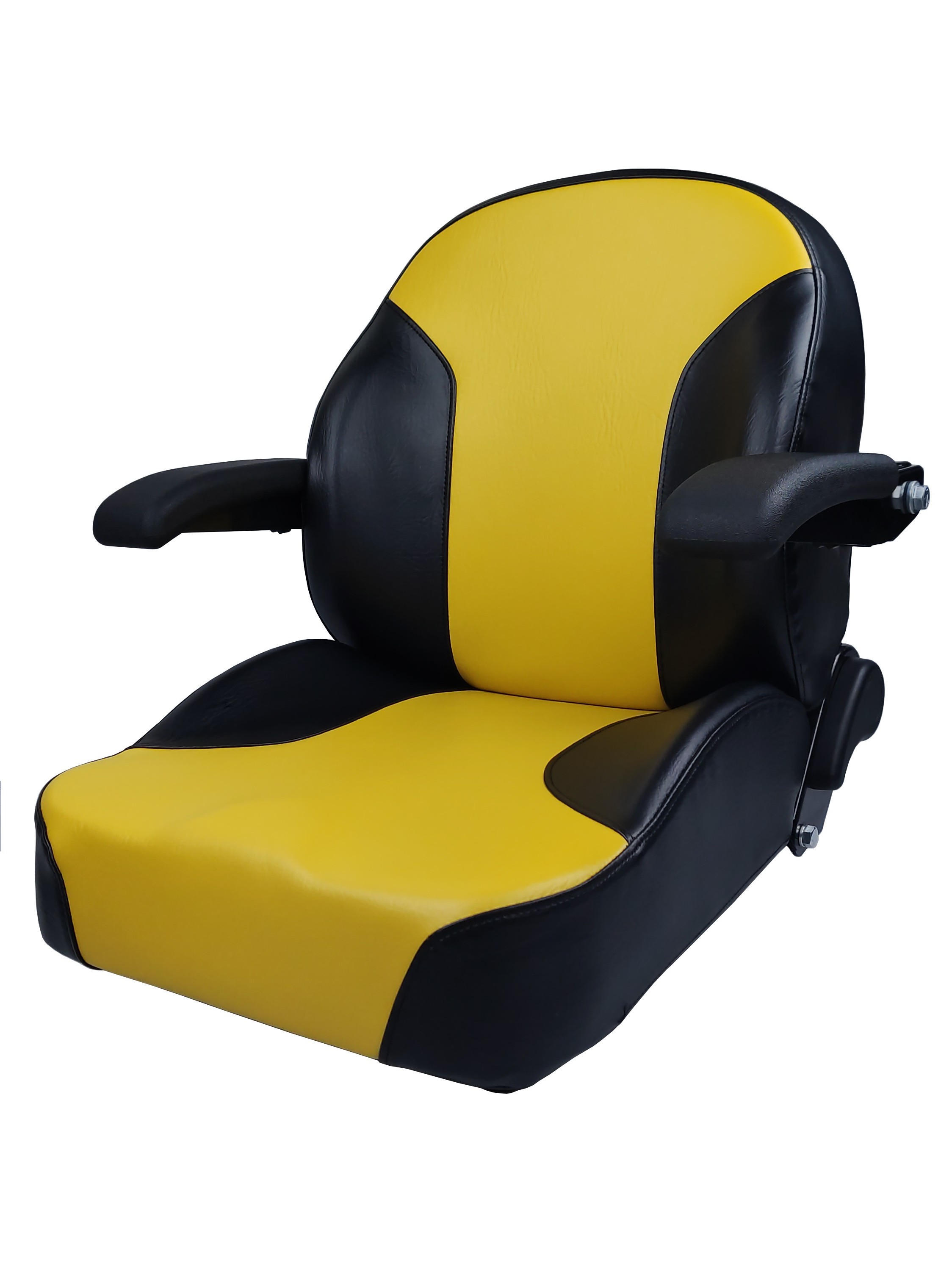
Views: 0 Author: Site Editor Publish Time: 2026-08-10 Origin: Site
Operating a zero-turn or riding mower on uneven, rutted terrain subjects your body to repetitive vertical impacts and lateral sway. This continuous motion leads to acute operator fatigue and long-term back pain. Unlike modern agricultural tractors that feature advanced cab isolation, standard ride-on mowers offer spartan seating comfort. Factory seats prioritize cost-efficiency over ergonomics, leaving you to absorb the brunt of the landscape's irregularities directly through your spine.
Operators frequently assume that upgrading to a taller seat back will solve ride quality issues, but they often misunderstand the mechanical difference between postural support and shock absorption. Bolting a larger seat onto a rigid frame does not eliminate the kinetic energy transferring from the ground to your body. This guide provides a technical evaluation of aftermarket seating solutions, analyzing whether a high-back configuration is sufficient for bumpy yards, or if mechanical suspension is required to create a genuinely comfortable ride.
Geometry vs. Isolation: A high-back seat improves posture and upper-body stability but does not absorb the vertical kinetic energy generated by rough terrain.
The Suspension Mandate: For uneven ground, mechanical or air suspension with adjustable weight settings and adequate travel (e.g., 2–3 inches) is the primary driver of impact reduction.
The Ideal Combination: The most effective mower seat for rough terrain integrates both a high-back design for lateral stability and a dedicated suspension base for vertical shock absorption.
Implementation Reality: Upgrading a seat requires verifying universal bolt patterns, operator weight capacities, safety kill-switch compatibility, and the adjustability of steering levers to ensure safe operation.
A successful seating upgrade must address two distinct physical forces. The first is vertical spinal compression. When a mower strikes a rut, hidden tree root, or rock, the upward force travels directly through the chassis. Without isolation, this force compresses your spinal discs. The second force is lateral muscle strain. Operating on slopes or navigating tight turns forces your body to lean. You must engage your core and lower back muscles constantly to remain upright. Upgrading a Lawn Mower Seat requires solving both the vertical impact and the lateral sway simultaneously to prevent physical burnout.
Rigid mower frames lack the complex suspension geometry found in passenger vehicles. Ground impacts transfer instantly from the caster wheels to the operator platform. Vertical shock causes immediate discomfort and contributes to long-term musculoskeletal degradation. Lateral sway presents a completely different challenge. Side-hill mowing forces you to fight gravity. Your body naturally wants to slide downhill. You compensate by tensing oblique muscles and gripping the steering lap bars tighter. This continuous muscular engagement accelerates fatigue, making a one-hour mowing session feel like an exhausting physical workout.
Standard mid-back, static-mounted seats fail because they rely entirely on basic foam padding for comfort. Factory seats use low-density polyurethane foam that degrades rapidly. UV exposure, moisture, and repeated compression break down the cellular structure of the foam. Within a few seasons, you are essentially sitting on the bare steel seat pan. Furthermore, static seats lack customizable weight displacement. A 150-pound operator and a 250-pound operator experience the exact same rigid ride. The factory design ignores the fundamental physics of kinetic energy dissipation, transferring every ounce of ground feedback into your lower back.
Professionals demand built-in shock absorption to survive eight-hour shifts across varied landscapes. Commercial zero-turn mowers often include premium seating straight from the dealer. However, residential operators are equally susceptible to injury. A homeowner with a bad back mowing a highly rutted two-acre property faces severe spinal stress. Residential mowers feature smaller tires and lighter frames, which bounce aggressively over washboard dirt and uneven ground. Proper isolation is mandatory for residential users who want to maintain their property without suffering debilitating pain the following day.
A high-back lawn mower seat provides immediate ergonomic benefits by supporting the thoracic spine and shoulders. Standard low-back seats stop at the lumbar region. This forces your upper back to support its own weight. A high-back design typically supports the mid-to-upper thoracic spine, enhancing upper-body stability. It reduces the muscular effort required to stay upright during prolonged mowing sessions. You can lean back into the seat, allowing the structural frame to bear your upper body's weight. This postural alignment prevents slouching, which is a primary contributor to lower back pain.
Despite the postural benefits, installing a static high-back seat on highly uneven terrain introduces a physical reality known as the whip effect. When a rigid mower hits a bump on one side, the machine tilts violently. Because the seat is bolted directly to the frame, the tall seat back acts as a lever. Your head and neck are at the top of this lever. Without suspension to absorb the initial tilt, the lateral movement amplifies at the top of the seat. This throws your upper body side to side. In cases of extreme terrain without shock absorption, a taller seat can actually worsen comfort by increasing head toss and neck strain.
A static high-back seat excels in specific environments. It is the ideal upgrade for relatively flat terrain where posture is the primary concern rather than impact. Large, smooth, manicured lawns over one acre require long-duration sitting but generate very little vertical shock. In these scenarios, you benefit immensely from the shoulder and upper back support. The lack of mechanical suspension is less of an issue because the ground itself does not punish the chassis. It serves as a highly effective upgrade for flat yards where operators simply need better back support.
The outdoor power equipment market offers two primary methods for isolating the operator. Premium mowers feature full platform or frame suspension. These systems utilize isolated footrests, floating frames, and heavy-duty coil-over shocks attached to the chassis. Operators with rigid-frame mowers do not have this luxury. They must rely entirely on a high-quality suspension seat to isolate rough terrain impacts. Upgrading the seat is the only viable method to retrofit shock absorption onto a standard zero-turn or riding tractor without replacing the entire machine.
Suspension bases utilize a combination of scissor mechanisms, coil springs, and dampeners to intercept kinetic energy. When the mower hits a rut, the chassis moves upward. The suspension base compresses, allowing the seat to remain relatively stationary while the machine moves beneath it. The importance of travel distance cannot be overstated. A quality mower seat for rough terrain provides two to three inches of smooth vertical travel. This distance gives the springs enough time and space to dissipate the impact energy before it reaches your spine. Polyurethane bumpers are often integrated to prevent harsh metal-on-metal bottoming out during severe impacts.
A one-size-fits-all suspension system inevitably fails. Spring tension must match the operator's mass. If a heavy operator sits on a softly sprung seat, the suspension bottoms out over every bump. This causes a harsh impact that is worse than a static seat. Conversely, if a light operator sits on a stiffly sprung seat, the suspension will not compress at all, resulting in a rigid ride. Weight-adjustable dials are mandatory. You turn the dial to increase or decrease spring preload, ensuring the suspension floats in the middle of its travel range regardless of who is driving.
Buyers do not have to choose between upper body support and shock absorption. The optimal solution for a bad back is a high-back seat mounted on an adjustable suspension frame. The suspension base handles the vertical kinetic energy, eliminating spinal compression. The high-back geometry handles the lateral sway and postural alignment, eliminating muscle fatigue. Combining these two technologies neutralizes the whip effect entirely. The suspension absorbs the tilt, keeping the tall seat back stable and preventing you from being thrown around the cockpit.
Evaluating the necessity of a dedicated lumbar support mower seat requires understanding spinal anatomy. The lower spine has a natural inward curve called the lordotic curve. Sitting on a flat surface forces your pelvis to roll backward, flattening this curve and straining the lumbar discs. Fixed contours in the seat pan and backrest help maintain this natural geometry. Premium models feature adjustable lumbar mechanisms. These allow you to increase or decrease the prominence of the lower back support, tailoring the fit to your specific body shape and reducing lower back fatigue over long hours.
Adjustable armrests play a massive role in reducing shoulder fatigue. Operating a zero-turn mower requires continuous manipulation of the steering lap bars. Without armrests, your shoulders bear the entire weight of your arms. Over several hours, this causes significant strain in the deltoids and trapezius muscles. Armrests also provide necessary lateral stability. When navigating steep hills or making aggressive turns, you can brace your forearms against the rests. This leverage prevents your body from sliding sideways and reduces the core strength needed to stay centered in the seat.
The longevity of a comfortable mower replacement seat depends heavily on material selection. Mowers operate in harsh environments exposed to direct sunlight, rain, and flying debris.
Marine-Grade Vinyl: This is the industry standard for durability. It sheds water instantly and resists UV degradation. It prevents cracking and fading over multiple seasons of outdoor storage.
Molded Polyurethane Foam: High-density molded foam retains its shape and compression resistance far longer than cut slab foam. It prevents the seat from hollowing out in the center after a few months of use.
Fabric Covers: While fabric breathes better and reduces heat retention during summer operation, it absorbs water and stains easily. It is generally reserved for mowers stored in enclosed garages and used in dry conditions.
Drainage Features: Quality seats include central drainage holes or channeled stitching to prevent water from pooling on the seat pan after a rainstorm.
You must differentiate between macro-shock absorption and micro-vibration dampening. The mechanical suspension base handles macro-shocks like hitting a tree root or dropping into a rut. However, the mower's engine and spinning blades generate continuous, high-frequency micro-vibrations. These vibrations travel through the frame and cause numbness in your legs and lower back. High-density memory foam and elastomer isolators mounted between the seat pan and the suspension base absorb these high-frequency waves. A premium seat addresses both macro-shocks and micro-vibrations simultaneously for complete operator isolation.
Comparison of Mower Seat Upgrade Features | ||
Feature | Primary Function | Ideal Terrain Application |
|---|---|---|
Static High-Back | Thoracic support, postural alignment | Flat, smooth yards over 1 acre |
Mechanical Suspension | Macro-shock absorption, vertical travel | Rutted, bumpy, uneven terrain |
Adjustable Lumbar | Maintains lordotic spinal curve | Long-duration mowing, operators with back pain |
Adjustable Armrests | Lateral bracing, shoulder fatigue reduction | Steep hills, aggressive zero-turn maneuvering |
Elastomer Isolators | Micro-vibration dampening | High-RPM engine operation, deck vibration |
The primary installation hurdle is mounting compatibility. Mower manufacturers do not use a single standardized bolt pattern. Before purchasing an upgrade, you must measure your existing bolt pattern. This involves measuring the width (side to side) and depth (front to back) of the threaded holes on the mower's seat bracket. Common dimensions include 11.25" x 11" or 8" x 11.5". Many aftermarket seats feature universal mounting pans with multiple slotted holes to accommodate various dimensions. If the patterns do not align, you must fabricate or purchase a universal adapter bracket. Drilling new holes directly into the mower's chassis is discouraged as it can weaken the structural integrity.
Adding a mechanical suspension base raises the overall seat height, often by two to four inches. This alteration shifts the mower's center of gravity upward. On flat ground, this change is negligible. However, on steep hills, a higher center of gravity increases the risk of a rollover. Operators navigating 25-degree inclines must evaluate this risk carefully. The increased height changes the pivot point of the machine. You must reduce your speed on slopes and avoid aggressive lateral maneuvers to maintain stability after installing a suspension seat.
Because you sit higher after a suspension upgrade, the zero-turn steering levers will feel too low. Reaching down to operate the lap bars introduces new shoulder and upper back strain, negating the ergonomic benefits of the new seat. Adjusting the steering levers is a mandatory follow-up step. Most zero-turn mowers allow you to tilt, raise, or lower the handles. Loosen the adjustment bolts on the lever linkages, raise the handles to match the new seating position, and tighten them securely. Your elbows should rest comfortably at a 90-degree angle when holding the levers in the neutral position.
The operator presence switch, or safety kill-switch, is a non-negotiable safety requirement. This switch detects weight on the seat and shuts off the engine and blades if you fall off. Upgrading the seat requires transferring the old switch or wiring a new one. Bypassing this system is highly dangerous and can lead to severe injury. You must ensure the new seat accommodates your mower's specific wiring harness. Check whether the system uses a 2-prong or 4-prong connector, and verify if the switch operates on a normally open (NO) or normally closed (NC) circuit. Many universal seats include a cavity specifically designed to house standard safety switches.
While a high-back design is excellent for posture and upper-body support, it is insufficient on its own for rough terrain. True relief from spinal compression requires mechanical shock absorption. A static high-back seat is recommended for flat yards over one acre. However, a combined high-back suspension seat is mandatory for any property with ruts, roots, or steep, uneven grades. Taking the time to properly match the seat's capabilities to the terrain will drastically reduce fatigue and prevent long-term injury.
Measure your current seat's bolt pattern (width and depth) to ensure compatibility with aftermarket mounting pans.
Check your mower's vertical clearance to confirm a suspension base will not interfere with the steering console or ROPS (Roll-Over Protection Structure).
Verify the adjustability of your zero-turn steering levers to accommodate a 2-to-4-inch increase in seat height.
Determine your required weight rating and select a suspension seat with an adjustable tension dial to prevent bottoming out.
A: A high-back seat improves comfort by providing postural support for the thoracic spine and shoulders, reducing muscle fatigue during long mowing sessions. However, without a suspension base, it does not absorb the vertical impact from bumps. It helps with posture, but not shock absorption.
A: The most effective seat for uneven ground combines a high-back design with a mechanical suspension base. Look for features like 2 to 3 inches of vertical travel, a weight adjustability dial, and integrated lumbar support to dissipate kinetic energy before it reaches your spine.
A: Upgrading to a comfortable mower replacement seat is highly cost-effective compared to purchasing a new machine. While full frame or platform suspension offers superior overall isolation, a quality aftermarket suspension seat provides excellent shock absorption for a fraction of the cost of a new premium mower.
A: Most zero-turn mowers can accept a suspension seat, provided you verify three things: the bolt pattern matches (or you use an adapter bracket), there is vertical clearance for the steering levers, and the new seat can integrate with your mower's safety kill-switch wiring harness.
A: Focus on combining a lumbar support mower seat with an adjustable suspension base. The lumbar support maintains the natural curve of your lower spine, while the suspension base absorbs the vertical impacts that cause spinal compression. Ensure the suspension is tuned to your specific body weight.
A: Yes. Adding a suspension base raises the seat height by 2 to 4 inches, which elevates the mower's center of gravity. This can increase rollover risks on steep hills (e.g., 25-degree inclines). You must also adjust your steering handles upward to maintain proper ergonomic control.
A: Armrests are highly recommended for zero-turn mowers. They provide lateral stability, preventing you from sliding sideways on hills. They also support the weight of your arms during continuous lever operation, significantly reducing shoulder and upper back strain over long periods.