Views: 0 Author: Site Editor Publish Time: 2026-08-15 Origin: Site
Operating heavy machinery exposes drivers to constant jolts, jarring impacts, and low-frequency vibrations. Over a standard ten-hour shift, these forces degrade concentration and cause severe musculoskeletal strain. Replacing an outdated seat directly addresses these hazards. Upgrading from a rigid, fixed unit to a suspension-equipped Construction Equipment Seat requires balancing upfront procurement factors, cab space limitations, and long-term ergonomic performance. Choosing the wrong suspension type leads to premature wear, bottoming out, or incompatible installations. Fleet managers must evaluate vertical cab clearance, electrical availability, and the specific terrain the machine navigates daily. A mismatched seat either fails to fit inside the ROPS canopy or breaks down prematurely under harsh site conditions. This technical, evidence-based heavy equipment seat comparison of air versus mechanical systems enables fleet managers and owner-operators to make a data-backed procurement decision.
Vibration Isolation: Air suspension systems provide superior active damping for high-frequency vibrations and long-shift operations, whereas mechanical systems offer reliable, passive shock absorption.
Space and Compatibility: Mechanical suspension seats are often required for low-profile cabs or machines lacking auxiliary electrical power, making them indispensable—and sometimes the only physical option—for specific equipment classes.
Installation Realities: Upgrading construction seat suspension requires verifying mounting bolt patterns, weight capacities, and 12V/24V electrical compatibility before purchase.
Heavy-duty seating functions as a primary safety device. Its engineering objective is isolating the operator from chassis dynamics. Earthmoving equipment lacks highway-vehicle suspension. Rigid axles, solid tires, and massive steel tracks transfer impact energy directly into the cab structure. Without an effective suspension mechanism beneath the operator, kinetic energy travels straight up the spinal column.
Whole-Body Vibration (WBV) represents a severe occupational hazard in the earthmoving sector. Prolonged exposure to low-frequency vibrations causes spinal compression, micro-traumas in the lumbar region, and severe muscle fatigue. Operators subjected to continuous WBV experience delayed reaction times and reduced spatial awareness. Suspension stroke length mitigates these destructive forces. The stroke represents the total vertical travel distance the seat compresses and rebounds. A longer stroke absorbs higher-amplitude impacts, preventing kinetic energy from reaching the operator's body. Effective damping mechanisms control compression and rebound speeds, preventing the seat from acting like a pogo stick after a heavy impact.
There is a direct correlation between seat quality and daily site productivity. Operators sitting in properly suspended seats maintain higher grading accuracy. Their hands remain steady on the joysticks. They experience fewer micro-interruptions caused by bracing for impacts. When an operator trusts the seat to absorb the shock of a rutted haul road or a sudden trench drop, they safely operate the machinery at optimal speeds. An operator in a rigid or failing seat instinctively slows the machine down to protect their back. Over a ten-hour shift, this reduction in travel speed translates to fewer loads moved, lower fuel efficiency per ton, and decreased overall site output.
Different machines generate distinct vibration profiles that the seat must counteract:
Crawler Dozers: Generate continuous high-frequency chatter from steel tracks engaging hard ground, requiring rapid dampening response.
Wheel Loaders: Produce severe vertical jolts when hitting ruts or carrying heavy bucket loads over uneven terrain, demanding long suspension strokes.
Excavators: Create lateral and rotational forces during swing cycles, necessitating strong lateral seat bolsters alongside vertical shock absorption.
Articulated Dump Trucks: Experience violent bouncing on unmaintained haul roads at high speeds, requiring among the highest levels of active suspension isolation.
Mechanical suspension systems rely on traditional physics to absorb and dissipate energy. The core mechanism typically utilizes a scissor-action steel frame. Inside this frame, engineers integrate a combination of steel coil springs, tension springs, and hydraulic shock absorbers. When the machine hits a bump, the downward force of the operator's weight compresses the steel springs. The hydraulic damper, essentially a cylinder filled with oil, forces fluid through small internal orifices. This fluid resistance slows down the spring's movement, dissipating the kinetic energy as trace amounts of heat and providing passive physical support.
The operational advantages of a mechanical suspension seat center on durability and simplicity. These systems contain no electrical components, wiring harnesses, or pneumatic air lines. This makes them highly resistant to failure in environments saturated with high dust, deep mud, or extreme moisture. They deliver dependable performance across all climates, from freezing winter logging sites to scorching summer quarries.
Mechanical units excel in low-profile applications. Compact track loaders, mini-excavators, and older utility tractors feature severely restricted cab headroom. Installing a standard full-stroke suspension in these machines creates a severe safety hazard. The operator's head could strike the ROPS (Roll-Over Protective Structure) roof during a bounce. Low-profile mechanical suspensions utilize shorter, stiffer springs and horizontal dampers to provide shock absorption within a highly compressed vertical footprint.
Despite their reliability, mechanical systems possess inherent limitations. They require strict manual calibration. The operator must turn a dial or pull a lever to adjust the spring tension to match their exact body weight. If a 250-pound operator takes over a machine previously set for a 150-pound operator without adjusting the dial, the seat will immediately bottom out. Bottoming out means the suspension fully compresses and slams against the steel bump stops, transferring a massive shock directly to the spine. Conversely, if set too stiffly, the seat barely moves, offering zero isolation.
Even when perfectly tuned to the operator's weight, mechanical springs exhibit significant travel or bounciness over rough terrain. The passive nature of coil springs means they react to impacts rather than anticipate them. They are generally less effective at neutralizing continuous, low-amplitude vibrations, such as the high-frequency hum generated by a large diesel engine or the continuous chatter of steel tracks on hard ground.
Common maintenance tasks for mechanical suspensions include:
Greasing the scissor mechanism pivot points every 500 operating hours to prevent metal-on-metal wear.
Inspecting the hydraulic damper for oil leaks around the main shaft seal.
Checking the main coil springs for stress fractures or rust degradation.
Verifying the weight adjustment dial turns freely and engages the tension cable properly.
Air suspension systems replace traditional steel coil springs with heavy-duty pneumatic air bags. These setups integrate an onboard 12V or 24V air compressor directly into the base of the seat. The compressor feeds air into the reinforced rubber bladder. Advanced ride-height valving monitors the seat's position. When the operator sits down, the valve opens, allowing the compressor to fill the bag until the seat reaches the optimal mid-point of its suspension stroke. As the machine traverses rough terrain, the air bag compresses and expands, actively adjusting to terrain impacts to protect the driver.
The primary advantage of an air suspension construction seat is superior ergonomics and active protection. The pneumatic bladder creates a distinct floating sensation. It actively isolates the driver from harsh, repetitive impacts during heavy earthmoving or long transit times. Air inherently absorbs high-frequency vibrations much better than steel. This dramatically reduces the micro-vibrations that cause deep muscle fatigue over an eight- or ten-hour shift.
Air systems feature automatic or push-button weight adjustment. This eliminates the guesswork of manual dial tuning. When a new operator enters the cab, they simply press a button, or the seat automatically levels itself to their exact weight. This guarantees the suspension remains exactly in the middle of its stroke, providing maximum upward and downward travel. Many premium air seats also feature customizable ride stiffness. Operators can adjust the hydraulic damper settings on the fly, softening the ride for smooth grading or stiffening it for aggressive, high-speed tramming across rocky sites.
The inherent limitations of air systems involve mechanical complexity. The integration of electric motors, air lines, and pneumatic valves introduces more potential failure points. Over thousands of hours in a dusty cab, compressor intake filters can clog, or air lines can develop micro-leaks. Furthermore, these seats require a reliable electrical connection. Retrofitting an air seat into an older, bare-bones machine might require custom wiring to tap into the ignition circuit, complicating the installation process.
Key components of an air suspension system include:
Integrated Compressor: The 12V or 24V electric motor that generates air pressure for the system.
Pneumatic Bladder: The heavy-duty rubber air bag that replaces traditional steel coil springs.
Ride-Height Valve: The mechanical or electronic switch that regulates air pressure to keep the seat centered in its stroke.
Air Exhaust Valve: Allows the operator to quickly dump air from the seat for easier cab exit.
Selecting the correct unit requires evaluating your specific machine constraints and operational environment. Cab space and profile requirements dictate your options before any other factor. You must measure the vertical distance from the mounting deck to the interior roofline, and from the steering wheel or joysticks to the back wall. A full-stroke air seat requires significant vertical clearance to operate safely. If you install a high-profile air seat in a skid steer, the operator's thighs will rub against the steering controls, and their hardhat will hit the glass. In many compact machines, a mechanical low-profile suspension remains the only viable upgrade path due to these strict spatial limits.
Vibration isolation performance must match the terrain and application. Articulated dump trucks and large wheel loaders spend their days tramming across heavily rutted haul roads at high speeds. These applications demand the active damping and long stroke of an air suspension system to prevent severe spinal impacts. Conversely, stationary excavators or smooth-surface asphalt compactors experience less violent vertical impacts. For these machines, a high-quality mechanical suspension provides more than adequate isolation from engine vibrations and minor track chatter.
Durability in harsh environments requires honest assessment of your job site. Waste management facilities, demolition sites, and underground mines expose equipment to extreme dust, corrosive materials, and moisture. An exposed mechanical spring assembly can be easily washed out and re-greased. However, fine silica dust can penetrate the air compressor intakes of pneumatic seats if the cab is not fully enclosed and positively pressurized. If your machine operates without doors or broken windows in a highly abrasive environment, mechanical systems often outlast pneumatic counterparts.
Maintenance and lifecycle requirements differ significantly between the two technologies. Mechanical seats require periodic greasing of the scissor pivot points and eventual replacement of the hydraulic shock absorber once it loses its damping resistance. This is a straightforward mechanical repair. Diagnosing a sagging air seat requires checking electrical grounds, testing compressor output pressure, and leak-testing the pneumatic bladder and valves. While air seats provide superior health benefits, fleet managers must account for the slightly higher complexity of maintaining pneumatic components over a five-to-ten-year lifecycle.
Operators often ignore degrading seat performance until it causes physical pain. Recognizing the mechanical failure signs early prevents long-term injury and equipment damage. Look for these specific indicators that your suspension mechanism has reached the end of its service life:
Leaking Hydraulic Fluid: A visible oil film on the damper shaft or a puddle under the seat base indicates blown shock seals. Once the fluid escapes, the seat loses all dampening capability and will bounce uncontrollably.
Air Compressor Whine: If the pneumatic compressor runs continuously while the machine is operating, the system has a massive air leak. The compressor motor will eventually overheat and burn out if the leak is not repaired.
Sagging Ride Height: When an air seat fails to maintain its center stroke position and slowly sinks to the floorboards over an hour, the ride-height valve or the main bladder is compromised.
Excessive Lateral Play: Grab the backrest and push it side to side. If the seat wobbles loosely, the scissor frame pivot bushings are completely worn out. This lateral slop forces the operator to constantly brace their core muscles to stay upright on uneven ground.
Metal Fatigue and Cracks: Inspect the base plate and the scissor arms for hairline fractures. Heavy operators or severe impacts can stress the steel frame beyond its yield point, leading to catastrophic structural failure during operation.
Feature | Mechanical Suspension | Air Suspension |
|---|---|---|
Primary Dampening Mechanism | Steel coil springs and hydraulic shocks | Pneumatic air bladder and compressor |
Weight Adjustment | Manual dial or lever | Automatic or push-button |
Power Requirement | None | 12V or 24V electrical connection |
Vibration Isolation | Moderate (Passive) | Excellent (Active) |
Ideal Applications | Compact equipment, open cabs, harsh environments | Large production machines, enclosed cabs, long shifts |
Maintenance Focus | Greasing pivots, replacing worn shocks | Checking air lines, cleaning compressor filters |
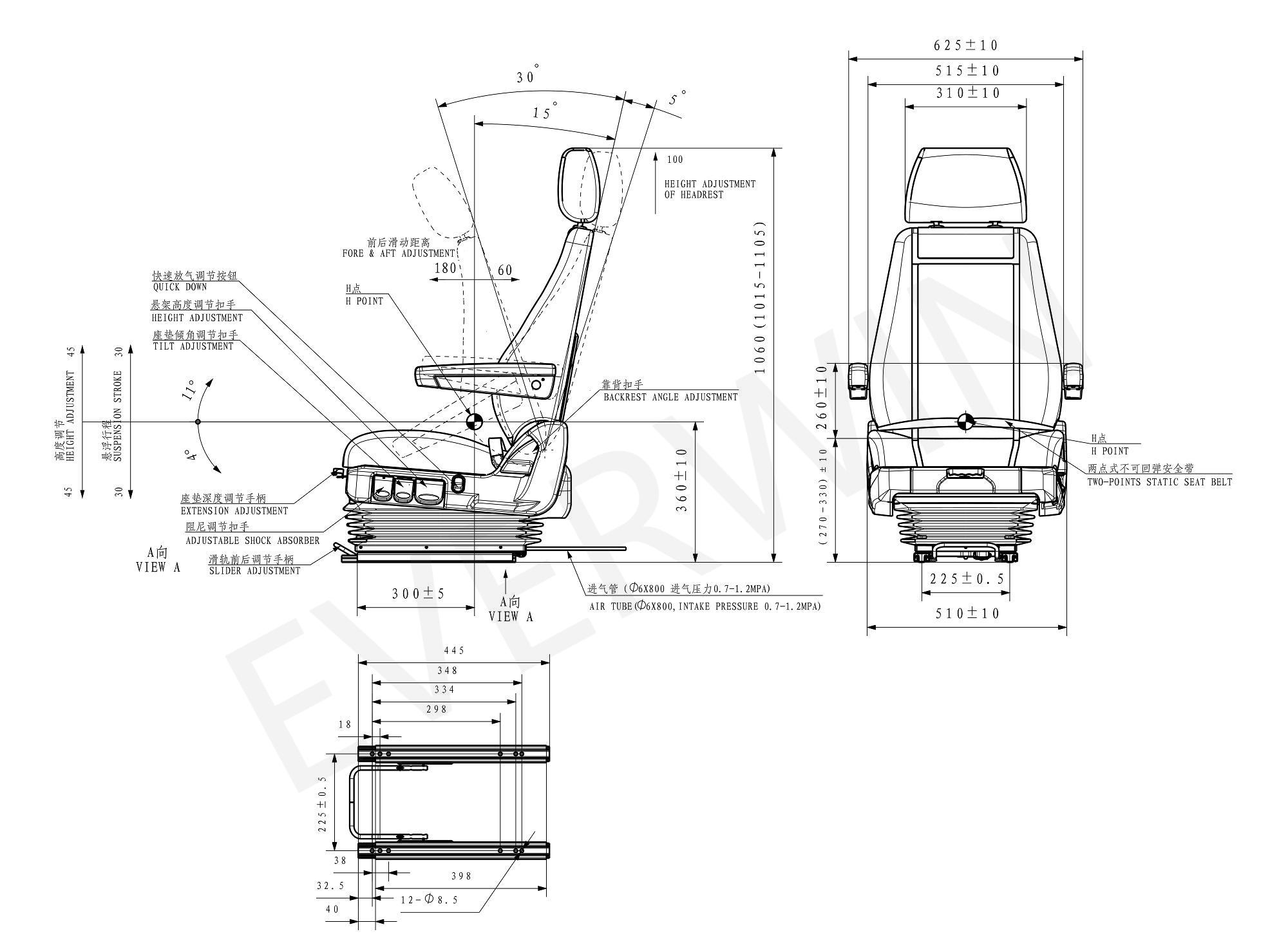
Upgrading your construction seat suspension involves specific implementation risks that can derail a procurement order. Electrical and pneumatic compatibility is the most common stumbling block. Heavy equipment electrical systems operate on either 12-volt or 24-volt architectures. You must verify your machine's voltage before specifying an air seat. Connecting a 12V compressor to a 24V system will instantly burn out the motor. Additionally, you must ensure the machine has an accessible, fused accessory circuit capable of handling the compressor's amperage draw upon startup.
Mounting patterns and adapter plates require precise measurement. Never assume universal fitment in heavy machinery. Every OEM utilizes different bolt hole patterns on their cab floors. You must measure the side-to-side and front-to-back distances of your existing mounting studs. Furthermore, you must calculate the Seat Index Point (SIP). The SIP is the standardized reference point determining the operator's position relative to the controls and the ROPS structure. Utilizing unapproved aftermarket brackets can alter the SIP, pushing the operator too close to the joysticks or outside the certified crush zone of the ROPS canopy. Always utilize OEM-approved adapter plates to maintain safety compliance.
Weight capacity and calibration realities present a severe risk if ignored. Standard suspension seats typically accommodate operators up to 280 or 300 pounds. If your workforce includes heavier operators, you must procure heavy-duty variants with reinforced scissor frames and higher-capacity air bags or stiffer springs. Purchasing a standard-rated seat for a heavy operator completely negates the benefits of the suspension. The seat will continuously bottom out, destroying the internal dampers and transferring massive shock loads directly into the operator's spine. Always verify the maximum weight rating of the suspension mechanism before finalizing the purchase.
Follow these verification steps before ordering a replacement seat:
Remove the existing seat and clean the cab floorboard to expose the bare mounting studs.
Measure the exact distance between the bolt hole centers, both laterally and longitudinally.
Check the machine's service manual to confirm the factory SIP specifications.
Locate the accessory wiring harness and test the voltage output with the engine running.
Measure the distance from the top of the bare mounting deck to the lowest point of the cab roof.
Take the following immediate actions to initiate your seating upgrade:
Measure your current seat's exact bolt mounting pattern and record the side-to-side and front-to-back dimensions.
Measure the vertical clearance from the cab floor to the roofline to determine your maximum allowable suspension stroke.
Test your machine's accessory wiring harness with a multimeter to confirm whether you have a 12V or 24V electrical system.
Weigh your heaviest operator to ensure the new suspension mechanism meets the required weight capacity rating.
Consult with a heavy-duty seating specialist to source the correct OEM-approved adapter plates for your specific machine model.
A: Yes, provided your machine meets three prerequisites. First, you need sufficient vertical cab clearance to accommodate the air seat's longer stroke. Second, you need matching bolt patterns or an approved adapter plate. Third, you must have an available 12V or 24V electrical power source to run the onboard air compressor.
A: You adjust it using a manual tension dial or lever located on the front or side of the seat base. Turning this dial increases or decreases the preload on the internal steel springs. You must set it to your exact body weight to prevent the seat from bottoming out or bouncing excessively.
A: They require slightly more maintenance than mechanical units. You must periodically check the air lines for leaks, ensure the compressor intake filter remains free of heavy dust, and verify the electrical connections remain tight. Keeping the cab environment clean extends the life of the pneumatic components significantly.
A: A low-profile suspension is a compact mechanism, typically mechanical, designed for machinery with restricted headroom like skid steers or mini-excavators. It uses horizontally mounted dampers and shorter springs to provide shock absorption without raising the operator's head dangerously close to the cab roof.
A: Bottoming out occurs when the suspension fully compresses and hits the internal bump stops. This happens if the mechanical spring tension is set too low for the operator's weight, if the hydraulic damper has failed, or if the seat's maximum weight capacity is exceeded during heavy impacts.