Views: 0 Author: Site Editor Publish Time: 2026-07-20 Origin: Site
Operating a zero-turn mower over uneven terrain transfers significant kinetic energy directly to the operator's spine. This makes seat quality a primary factor in long-term physical health and daily mowing efficiency. Many buyers fall for the illusion of plushness, confusing thick, cosmetic foam padding with actual mechanical vibration isolation. This misunderstanding frequently leads to chronic back pain and severe post-purchase regret when the foam compresses after just a few hours of use.
Manufacturers heavily differentiate their product lines based on comfort features and structural integrity. Buyers often struggle to determine if the premium cost of a commercial zero turn mower seat is justified for their specific acreage, or if a standard residential mower seat will suffice without causing severe operator fatigue. This guide provides a technical breakdown of the mechanical differences, ergonomic impacts, and implementation realities of upgrading your equipment.
Suspension Mechanics: Residential seats rely on basic elastomer bumpers or simple coil springs, whereas commercial seats utilize adjustable mechanical or pneumatic (air-ride) suspension systems to isolate vibration.
Material Durability: Commercial seats feature high-density, closed-cell foam and heavy-gauge marine-grade vinyl designed for 1,000+ hour duty cycles, compared to the thinner, easily compressed materials in residential models.
The 10-Year Lifespan Gap: A commercial-grade seat is built to survive a decade of daily exposure, while residential seats typically degrade, crack, and bottom out within 2 to 5 years.
Ergonomic Adjustability: True commercial seats offer granular adjustments—including weight dials, lumbar support, and adjustable armrests—allowing for custom alignment that residential seats lack.
Upgrade Feasibility: Installing a commercial replacement ZTR seat on a residential frame is possible but requires verifying universal bolt patterns, clearance heights, and Operator Presence Sensor (OPS) switch compatibility.
Defining what makes a Zero Turn Mower Seat truly effective requires looking beyond aesthetics. Success criteria for mower seating hinge on vibration isolation, posture support, and material longevity. These factors must align with the hours spent mowing and the roughness of the terrain you navigate. When evaluating equipment, the duty cycle metric is the primary indicator of performance. Seat hours matter significantly more than engine horsepower when calculating long-term physical wear on the operator. A high-horsepower machine on a bumpy field will physically exhaust an operator long before the engine reaches its limits if the seat fails to absorb the impact.
The structural foundation and pan design represent the first major divergence between categories. Residential models typically utilize stamped steel or plastic pans. These materials reduce weight and manufacturing costs but lack torsional rigidity. When you hit a ditch bank or navigate a steep incline, a plastic pan flexes. In contrast, commercial variants are built on reinforced, heavy-gauge steel frames. Frame rigidity directly impacts the seat's ability to handle lateral forces and off-camber shifting on hillsides, keeping the operator stable and secure during aggressive maneuvers.
Foam density and upholstery choices further separate the two tiers. Residential seats generally use open-cell foam. While it feels soft initially in the showroom, open-cell foam degrades and compresses quickly under sustained weight, eventually leaving the operator sitting against the hard plastic or metal pan. Commercial models employ closed-cell foam that retains its shape and structural integrity over years of daily use.
Feature | Residential Seat | Commercial Seat |
|---|---|---|
Base Pan Material | Plastic or thin stamped steel | Heavy-gauge reinforced steel |
Foam Type | Open-cell (compresses easily) | Closed-cell high density (retains shape) |
Upholstery | Standard vinyl, single stitching | Marine-grade vinyl, double stitched |
Vibration Isolation | Rubber bumpers | Mechanical or pneumatic suspension |
A standard residential model is engineered for light duty. Typical construction includes a mid-back height profile, fixed static mounting brackets, and a complete lack of integrated mechanical suspension. Any shock absorption usually comes from small rubber elastomer bumpers mounted under the seat pan. Armrest constraints are another common limitation. Many residential models feature standard fixed plastic armrests or omit them entirely. This design flaw transfers steering lever vibrations directly into the operator's hands, shoulders, and neck, accelerating fatigue.
These seats do have a specific, ideal use case. They are perfectly adequate for flat, manicured lawns where mowing durations remain under 1.5 hours and the total property size is under 2 acres. In these controlled environments, the lack of heavy-duty suspension is rarely noticed, and the basic foam provides sufficient comfort for short bursts of activity.
However, push a residential seat beyond its operational threshold, and failure points quickly emerge. Operators frequently experience bottoming out when hitting ruts or hidden holes, sending a sharp jolt straight up the spine. The lack of adjustable lumbar support leads to lower back strain as the operator naturally hunches forward to reach the steering levers. The hidden costs of this fatigue are substantial, resulting in decreased focus, slower overall mowing speeds, and necessary physical recovery time after the job is done.
Foam compression leading to direct contact with the hard seat pan.
Vinyl cracking from UV exposure and lack of material thickness.
Mounting bracket fatigue from repeated impacts without suspension travel.
Operator back strain due to zero lumbar support adjustments.
Stepping up to commercial-grade equipment introduces advanced suspension systems designed specifically to mitigate terrain impact. Mechanical suspension utilizes scissor linkages paired with adjustable shock absorbers and heavy-duty springs. Pneumatic suspension systems take this a step further, using onboard 12-volt air compressors and durable air bladders. Both systems are engineered to absorb vertical impacts and high-frequency vibrations long before they reach the operator's spine.
Operator-specific adjustments provide critical ergonomic benefits. True commercial seats feature weight adjustment dials, allowing the user to calibrate the suspension travel to their exact body weight. This precise calibration prevents the suspension from either being too stiff or bottoming out entirely. Heavy-duty ergonomic armrests are fully adjustable and padded, stabilizing the upper body and isolating steering lever feedback. Furthermore, adjustable lumbar support and variable backrest angles allow operators to maintain a neutral spine position regardless of their height or arm length.
When analyzing the duty cycle and long-term value, the cost-to-value ratio becomes clear. A commercial seat is engineered to withstand 8 to 10 hours of daily use over a lifespan exceeding 10 years. For professional landscapers, this durability is non-negotiable. For heavy residential users or individuals with chronic back issues, the higher upfront cost translates into a viable, health-preserving investment that outlasts the mower itself.
Conducting a thorough zero turn seat comparison requires evaluating both categories across critical decision-making lenses. Ride quality must be directly matched to terrain roughness. If you maintain smooth, level turf, a residential seat is structurally sufficient. However, if your property includes pasture land, rutted fields, exposed tree roots, or steep ditch banks, commercial suspension is required to maintain control and prevent injury.
Health and safety compliance is another major differentiator. Commercial seats are designed to better support OSHA guidelines regarding the reduction of Whole-Body Vibration (WBV) in professional landscaping environments. Prolonged exposure to WBV is a documented cause of musculoskeletal disorders, making vibration isolation a medical necessity rather than a luxury feature.
This brings us to the 5-8 acre homeowner dilemma. Many property owners fall into a prosumer sweet spot. They run high-end residential or semi-pro mowers but tackle acreage that demands professional-grade spinal protection. For these users, upgrading the factory seat is the ultimate hack. It provides the physical protection of a commercial machine without the massive expense of upgrading the entire mower platform.
Terrain Type | Recommended Seat Type | Expected Outcome |
|---|---|---|
Flat, manicured suburban lawn | Residential Static Seat | Adequate comfort for short durations under 1.5 hours. |
Uneven pasture, 3+ acres | Mechanical Suspension Seat | Absorbs moderate impacts, prevents lower back fatigue. |
Highly rutted fields, daily commercial use | Pneumatic Air-Ride Seat | Maximum vibration isolation, complies with WBV safety standards. |
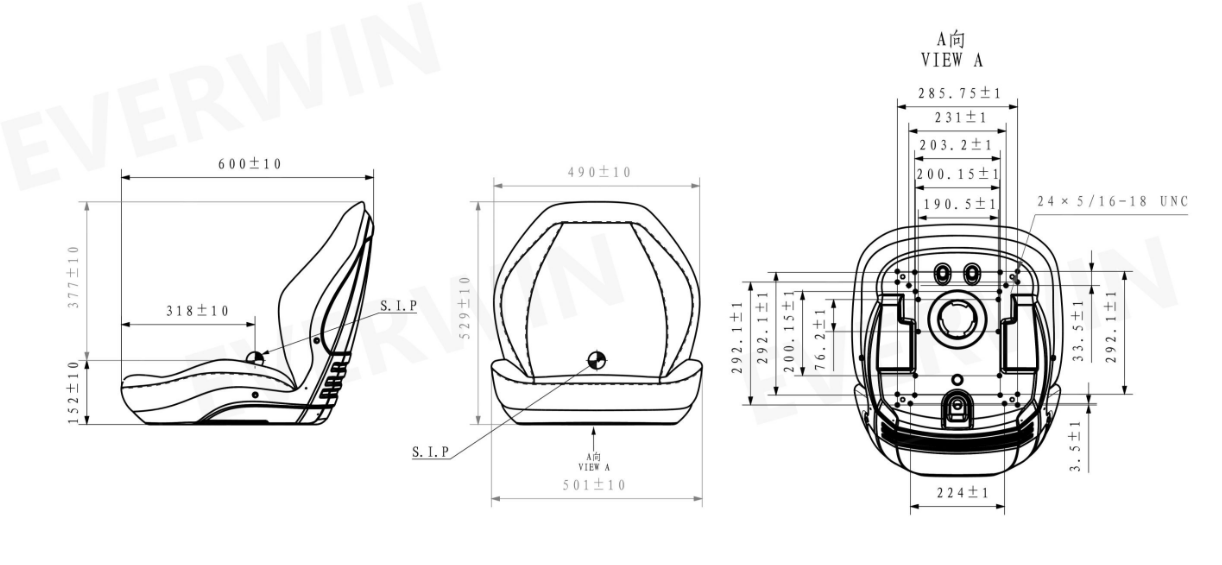
Deciding to install a replacement ZTR seat requires careful technical planning. Fitment and bolt pattern compatibility are the first hurdles. Mismatched mounting tracks will prevent installation. You must measure your existing bolt pattern—specifically the width and depth between the mounting holes—and compare it to the new seat's specifications. In many cases, utilizing universal adapter plates is necessary to bridge the gap between a commercial seat track and a residential mower frame.
Operator Presence Sensor (OPS) integration presents a critical safety and technical challenge. The safety switch located inside the seat cushion kills the engine or mower deck if the operator falls off. Wiring a new seat's safety switch into an existing residential mower's wiring harness often requires adapting 2-prong connectors to 4-prong systems, or vice versa. You must never bypass these safety switches. Utilize proper wiring diagrams and splicing techniques to ensure plug-and-play compatibility and maintain the machine's safety integrity.
Finally, consider clearance, center of gravity, and controls shift. Heavy-duty suspension seats typically sit 2 to 4 inches higher than standard static seats due to the mechanical linkages housed beneath the pan. This height increase directly affects your steering lever reach. You will likely need to unbolt and adjust your control levers upward to match the new seating position. Additionally, raising the operator's weight alters the machine's center of gravity. You must analyze how this impacts stability when navigating steep inclines and ensure you still have adequate clearance beneath your Roll-Over Protection Structure (ROPS) or low-hanging tree branches.
Upgrading your mower seating directly impacts your physical health and daily operational efficiency. Residential seats serve a purpose for small, flat properties, but they fail rapidly under heavy use or rough terrain. Commercial suspension seats provide the necessary mechanical isolation to protect your spine and keep you productive over long hours.
Measure your current seat's bolt pattern width and depth to verify aftermarket compatibility.
Inspect your steering levers to confirm they have enough vertical adjustability to accommodate a taller suspension seat.
Check your Operator Presence Control wiring harness to determine if you need a 2-prong or 4-prong adapter.
Weigh yourself with your standard work gear to ensure the suspension seat you select can be calibrated to your exact load.
A: Yes, you can install a commercial seat on a residential mower by verifying the mounting bolt patterns. You may need a universal adapter plate to align the tracks. Ensure you have enough vertical clearance, as suspension seats sit several inches higher.
A: Absolutely. Suspension seats drastically reduce spinal compression and operator fatigue by absorbing impacts from rough terrain. Their heavy-duty construction offers a 10+ year durability, making them a wise long-term investment for your physical health.
A: Measure the distance between the mounting bolts on your current seat from left to right and front to back. Compare these dimensions to the bolt pattern specifications of the replacement seat. Also, check for adequate steering lever clearance.
A: Mechanical suspension relies on adjustable steel springs and shock absorbers connected via scissor linkages to dampen vibration. Air suspension uses an onboard 12-volt compressor and pneumatic air bladders, offering a slightly smoother, infinitely adjustable ride.
A: Residential mower seats typically last 2 to 5 years before the open-cell foam degrades and the thin vinyl cracks. Commercial seats, built with closed-cell foam and marine-grade vinyl, are designed to last 10+ years under continuous daily duty cycles.
A: Often, yes. You must match the new seat's Operator Presence Control switch to your mower's wiring harness, typically adapting between 2-prong and 4-prong connectors. Never bypass this switch, as it is a critical safety mechanism.